The Discretionary Edge
A follow-up course to Macro for Active Traders: how to turn a curated reading into your own decision.
What this course is for
The first course taught you to read the setting: the growth and inflation backdrop, central-bank communication, market expectations, narratives, positioning and price response. It gave you two starter trade types and a way to move from a dashboard reading to a trade, a wait or a quick exit.
This course deals with the part no dashboard can finish for you. You must decide which facts matter now, what the other side of an idea looks like, and whether a trade still makes sense at the price you can actually obtain. That is discretion.
You do not need a PhD or decades in finance to begin developing it. You do need curiosity, a small set of markets you can understand, the willingness to be wrong, and a way to make your thinking visible. The Courtroom Method is our simple way of doing that. It asks you to hear the strongest case against a trade before you let yourself make the case for it.
Discretion is not permission to ignore a loss limit, change the facts after a trade, or call every hunch an edge. It is judgment applied to an uncertain situation, with a record that you can revisit.
Lesson 1 - Where discretion enters the process
Teaching aim: Know which parts of the work the dashboard can organise and which decisions remain yours.
Our daily reading can put events in order. It can show when a release occurred, what the earlier expectation was, what a central bank actually said, how rates and prices responded, whether a positioning measure is old, and where the current story appears to stand. It can flag an unusual correlation or a possible change of Quad. It can also say, honestly, that the evidence is incomplete.
The reading cannot assign a permanent weight to each item. A central-bank sentence may dominate one week. An oil supply shock may make the monthly growth and inflation map temporarily secondary. A surprising data release may be less important than the fact that the market was already positioned for it. Nor can a dashboard know the entry price and risk that are acceptable to you.
| Your state | What the reading helps you see | Your discretionary decision |
|---|---|---|
| 1. Flat and monitoring | What changed, what is scheduled, which markets have everyone’s attention. | Which driver deserves attention; whether being flat is the best use of capital today. |
| 2. Idea generation | Potential gaps between the prevailing story, fresh evidence and what prices imply. | Which discrepancy has a plausible path over your holding period; which idea to reject. |
| 3. Entry and initial risk | The catalyst, market response, contrary evidence and relevant levels. | Whether the trade is still attractive at an obtainable price; how to express it and how much to risk. |
| 4. Review and updating | New data, changed policy language, a changed narrative and price behaviour since entry. | Whether the case has improved or deteriorated enough to hold, add, reduce or exit. |
| 5. Exit and analysis | What happened after the decision and which evidence arrived when. | Whether the remaining payoff justifies the exposure; what the decision teaches you. |
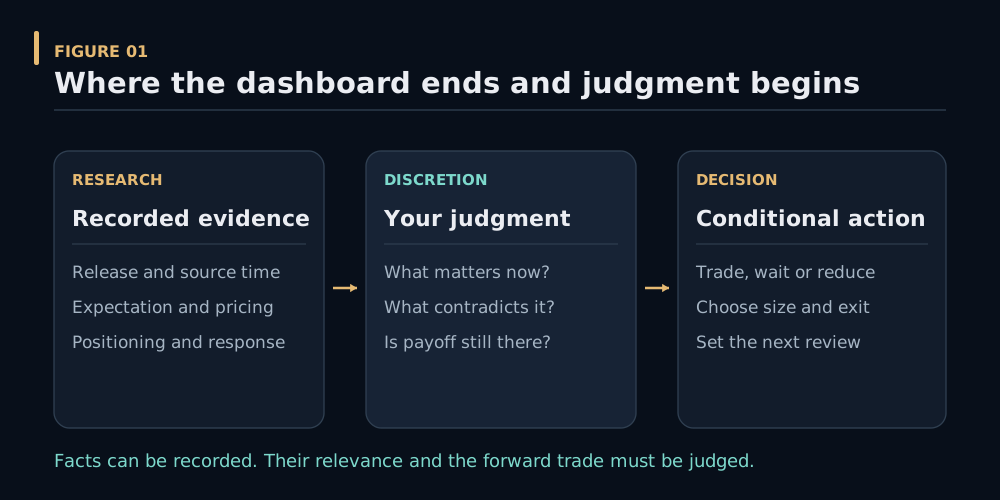
Figure 1: The reading records evidence; judgment decides what matters and what action is justified.
The market’s narrative cycle runs across all five states. A story may be emerging, widely accepted, crowded or being challenged while you are still flat. If you own a trade, that story can continue maturing during the life of the position. A narrative label gives you a question to investigate, not an automatic direction.
The same is true of the Quad. A possible change in the growth and inflation regime tells you where to look for changes in actual data, central-bank language and prices. It does not decide that you should buy or sell an asset today.
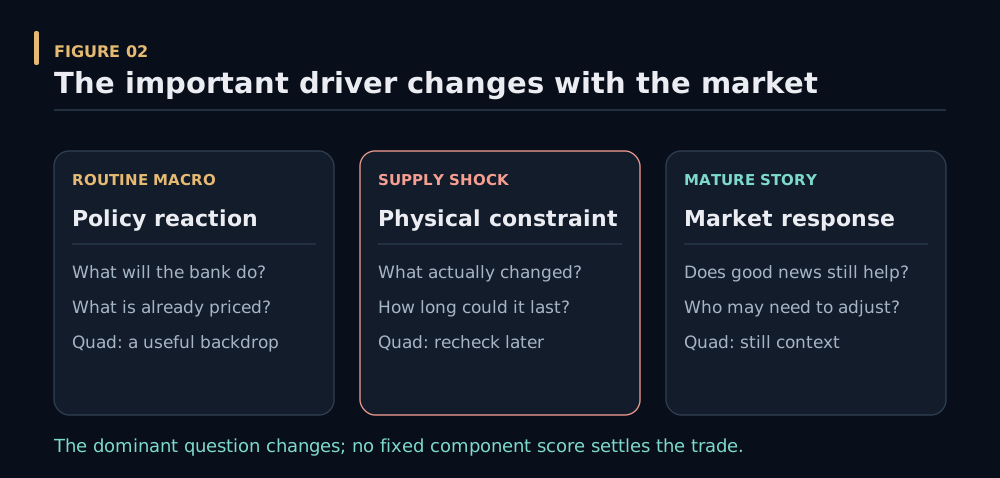
Figure 2: The dominant driver changes; a fixed score cannot decide every market.
Keep some parts of the process deliberately firm: record the source and time of important evidence; distinguish the expectation before an event from the explanation afterwards; know the value of the instrument you trade; define the loss you are prepared to carry; and review a position after material new information. Your judgment decides how the evidence fits together inside those boundaries.
Try it: Take one line from today’s dashboard and finish two sentences: “This is an observation: …” and “My interpretation of what matters over the next week is: …” You should be able to change the second sentence without rewriting the first.
Takeaway: Research narrows the field. Discretion chooses the relevant question, tests an interpretation, and decides whether the opportunity remains at today’s price.
Lesson 2 - Why consensus can lose you money
Teaching aim: Learn what to question about a popular view without making contrarianism a trading rule.
A consensus view can be correct and still be a poor new trade. Imagine that almost everyone expects a central bank to cut rates. The currency has already fallen, the rate market already reflects the cut, and many traders are already short. If the bank cuts as expected, nothing important may need to change. A trader who sells only after reading the familiar headline may have arrived after the useful adjustment.
There are several ways a trader can get stuck with consensus:
- Repeating an economic fact without checking what was expected or priced.
- Seeing a good story and entering after most of the move has happened.
- Treating an unusual positioning reading as proof that a reversal must start today.
- Reading the same event in several indicators and counting it as several independent reasons.
- Ignoring a changed price response because the old narrative still sounds persuasive.
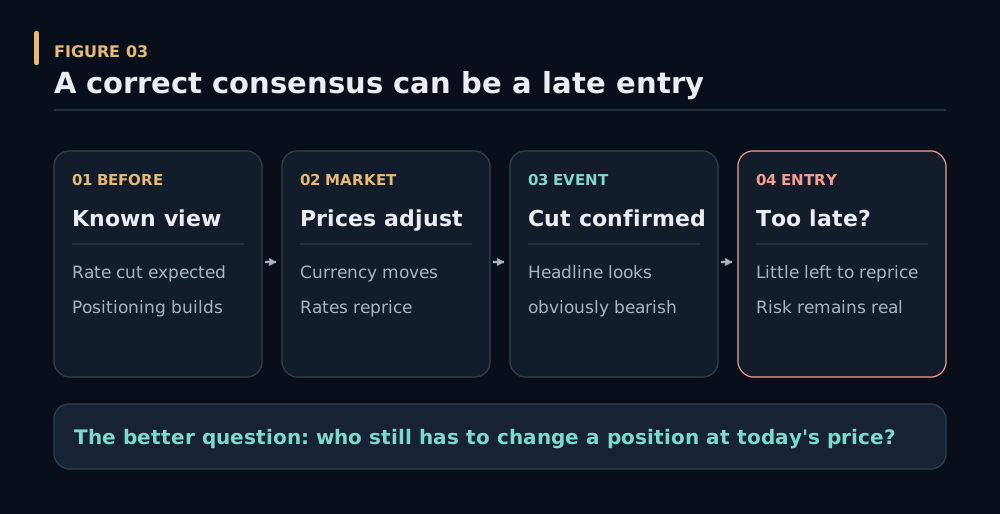
Figure 3: A popular view can be right while the new entry is already late.
The cure is not to oppose the crowd for its own sake. A powerful, increasingly popular view can drive prices for longer than you expect. Your advantage is the freedom to ask, “What would have to change from here for this position to pay?” Sometimes you join the move after a fresh catalyst confirms it. Sometimes you wait for a crowded view to fail. Often you do nothing.
This is a practical edge a newer trader can begin to cultivate. You can notice that gold rises on news that used to make it fall. You can notice that an index stops recovering after seemingly good news. You can notice that an obvious oil supply concern has become the main market question, even if the monthly Quad has not changed. Such observations do not guarantee a profitable trade; they point you toward the work that might produce one.
Your lack of an institutional mandate also gives you one useful choice: you can be flat. A fund may have exposures to manage continuously. You can wait until you understand the current driver and can name a price and an adverse path. That freedom is valuable only if you actually use it.
Try it: Write down a popular market sentence, such as “lower rates are good for stocks.” Now ask what the market expected, whether stocks already moved, what caused rates to fall, and how stocks actually responded. The simple sentence may be useful background, but it is not yet a trade.
Takeaway: The expensive version of consensus is arriving late, accepting the explanation without a test, and paying a poor price. Independent judgment begins with the next question.
Lesson 3 - The Courtroom Method
Teaching aim: Give every candidate an opposing case and a conditional verdict.
Start with a specific proposition. “Gold is bullish” is too vague to put on trial. Try: “Over the next ten trading days, a sustained repricing toward easier policy could support another leg higher in gold, provided the dollar and rate response persist and the entry still offers enough room.”
Include the market, direction, proposed mechanism, approximate holding period and what would challenge it. Then use three roles in this order.
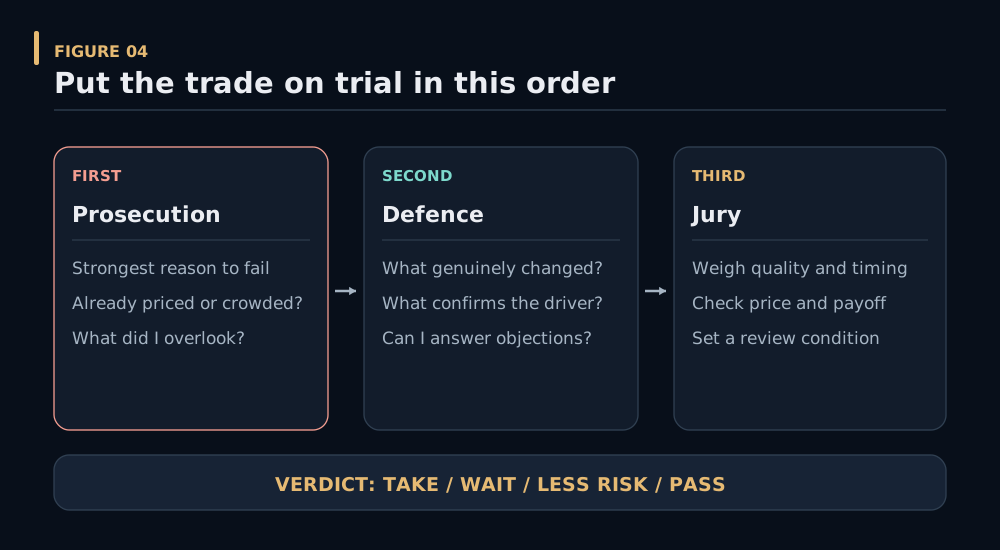
Figure 4: Hear the contrary case before arguing for the trade, then deliver a conditional verdict.
1. The prosecution: try to destroy your idea
This side goes first because a compelling story is easy to love. Ask:
- What is the strongest credible explanation for why my mechanism will fail?
- What was already expected, priced or positioned before the apparent catalyst?
- Is there macro evidence, a central-bank message, sentiment or price behaviour that contradicts the idea?
- Is momentum weakening, or is this just a normal pause within a trend?
- Am I reacting to fear of missing out, a recent loss, or the wish to make an old opinion right?
- What would the opposing trader point to that I have left out?
Write the strongest two or three points, with the evidence and its date. A weak straw-man objection does not help you. “Anything can happen” is true but cannot discriminate between trades.
2. The defence: make the best positive case
Now explain why the opportunity may exist despite those objections. Ask:
- What new development could force participants to adjust expectations or positions?
- Which markets confirm that mechanism, and which do not?
- Where is the story in its cycle, and who may still have to act?
- How does my proposed entry, holding period and instrument express the idea?
- Can I answer the prosecution’s strongest point with evidence, or must I leave it unresolved?
Your defence should be testable. “It feels ready” is a prompt for investigation. “After the surprise, short-term rate expectations moved, the dollar weakened broadly, and gold held the first gain through the next session” is a set of observations someone else can check.
3. The jury: weigh, then deliver a conditional verdict
Do not count bullet points. One direct contradiction in the mechanism may matter more than five minor supporting facts. Weigh the relevance of each item to your holding period, the quality and freshness of its source, and whether several observations come from the same underlying event.
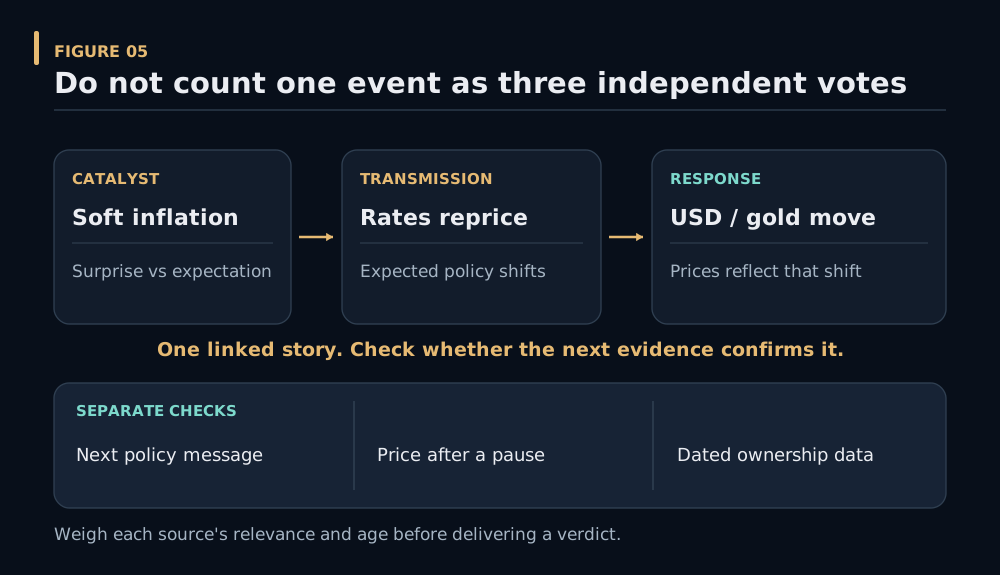
Figure 5: Linked market reactions help trace one mechanism; seek separate checks and respect source age.
Then ask the question the argument has not yet answered: Is the trade attractive at this price, with this downside and this much payoff left? Being right about direction after an event is not enough if the entry is too late or the normal adverse move is larger than your risk budget.
Your verdict may be take, wait for a specified condition, take less risk, or pass. If you already hold it, the verdict may be hold, reduce, or exit. State what new evidence would change the verdict and when you will look again. A wait must name the missing evidence or acceptable price; otherwise it is only indecision.
We sometimes reserve capital for ideas we would call four- or five-star cases. Those stars express a comparative judgment about the setup, evidence and payoff. They are not measured win probabilities. A strong case can lose, and a passed trade can win. The point is to make selective risk taking deliberate and reviewable.
A one-minute version:
Case: What is the proposed trade, mechanism and horizon?
Prosecution: What is the best reason it fails, including price already paid?
Defence: What fresh evidence could make it work from here?
Jury: Take, wait, take less risk, or pass? At what price and after what evidence will I review?
Takeaway: The courtroom is an argument you can challenge, not a scoring machine that removes uncertainty.
Lesson 4 - A worked case: a gold rally after a softer inflation release
Teaching aim: See how a plausible long idea can produce a decision to wait.
Everything in this example is invented. It describes a process, not a current gold recommendation.
Before a US inflation release, the market expects the monthly reading to be 0.3%. It comes in at 0.1%. Short-term US rate expectations fall, the dollar weakens against several currencies, and gold rises 2.5% before you can consider an entry. The most recent futures report had already shown substantial long ownership. The next central-bank speech is tomorrow.
The case: “The softer release could bring a sustained repricing of policy expectations and further gold buying over the next two weeks.” That is a plausible idea. It is not yet a good purchase at the present quote.
Prosecution: Much of the initial adjustment may already be in the price. The reported positioning predates the release and does not tell us who bought or sold today. A central-bank speaker could challenge the market’s reading, or the low inflation number could prove unusually narrow. If I buy after a 2.5% jump, an ordinary pullback may force my exit before any later continuation. Am I buying because the forward payoff is good, or because the move looks obvious in hindsight?
Defence: The surprise differs from the archived expectation, policy pricing actually moved, and the dollar move is broad. These observations give a plausible transmission channel for gold. If rate expectations remain lower after the speech, and gold holds most of its first advance during a pause, other investors may still have to adjust. Crowded positioning can sustain a trend as well as threaten an exit; the report alone does not veto the idea.
Jury verdict today: WAIT. The mechanism is worth watching, but the available entry offers too little room relative to a plausible adverse move. The trader marks a possible consolidation area, checks tomorrow’s speech and rate pricing, and asks whether gold holds its gain. If the market confirms and an acceptable entry appears, the case can be heard again with a defined loss and a new forward payoff. If the speech reverses rate pricing or gold gives back the move despite supportive conditions, the trader may pass. A higher price that still offers a strong asymmetric opportunity is possible; a lower price that appears because the thesis failed is not a bargain.
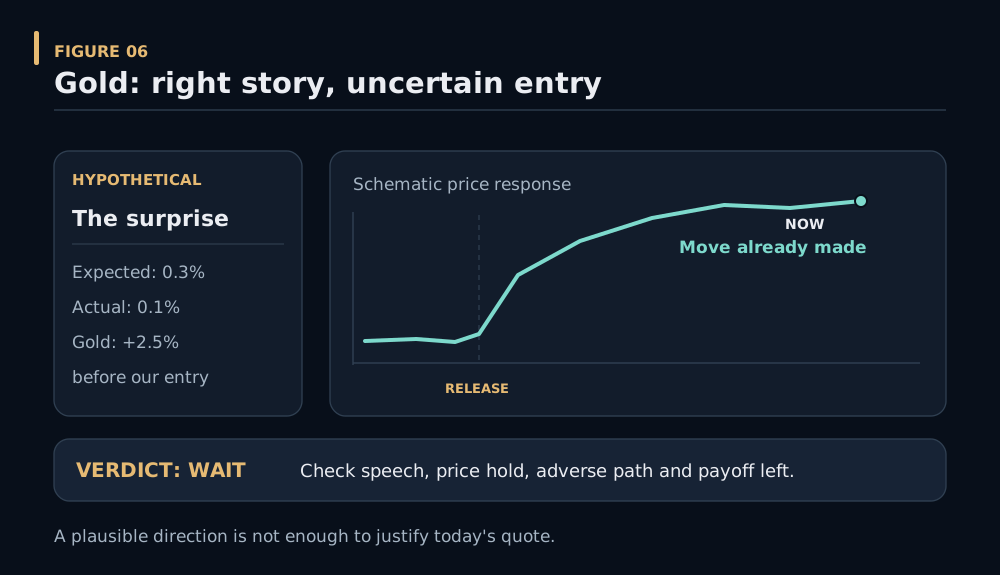
Figure 6: The gold move has a plausible explanation; the entry after the jump still needs its own case.
Suppose an entry becomes attractive two sessions later. The courtroom does not close at execution. Around day five, compare the original claim with what rates, the dollar, gold and the central-bank message have actually done. If the catalyst remains live and enough payoff is left, a 9-20 day trade may still be sensible. If the reason for owning it has disappeared, an open position does not earn special protection just because you already bought it.
Notice what discretion did. It selected the policy repricing as the possible driver, treated the old positioning report at its proper age, and separated a correct explanation of the first move from the quality of a new entry. It also allowed the verdict to be wait without pretending the bullish story was false.
Try it: Change one fact: gold falls despite lower rate expectations and a weaker dollar. Give the strongest explanation you can think of for the divergence, then name one observation that would distinguish it from the alternatives. Do not force an answer from one price bar.
Takeaway: A sound market explanation can be a poor trade after the price moves. The verdict belongs to the forward opportunity.
Lesson 5 - Reopen the case as the trade changes
Teaching aim: Use judgment during the life of a position, especially after a shock or an unusually fast move.
The initial verdict is provisional. Markets bring new evidence, sometimes slowly through data and communications, sometimes all at once through a shock. Around day five, conduct a formal review; after a material event, do it immediately.
Use four questions:
- What was my original claim? Read the sentence you wrote before entry.
- What changed? Separate new facts from repeated commentary and your own profit or loss.
- Who is now being forced to adjust, and how is price responding? Has the narrative strengthened, become crowded, or begun to fail?
- Would I still want this exposure at today’s price? Consider the risk already in the book and the payoff still available.
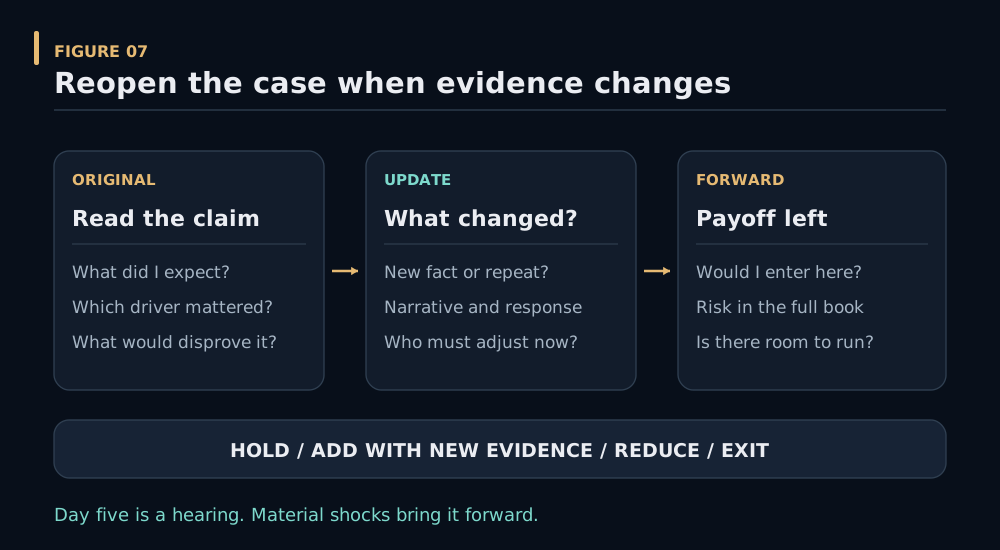
Figure 7: Reopen the case on day five or sooner when important evidence changes.
A long trade may deserve more time if the mechanism is unfolding in stages and the remaining payoff is still attractive. A 9-20 trading-day move need not be closed at day five. Equally, a thesis can fail on day two. The review date is a reminder to think; it is not a promise to keep a trade until then.
The first response to a damaging shock may be to reduce or go flat quickly. That is a discretionary judgment about changed risk, not a forecast that the market will keep moving in the same direction. Once flat, you can take time to rebuild the case. A short after a selloff and a later long on the right side of a recovery are separate cases, each with its own evidence, entry and loss plan. There is no need to reverse a position in one motion.
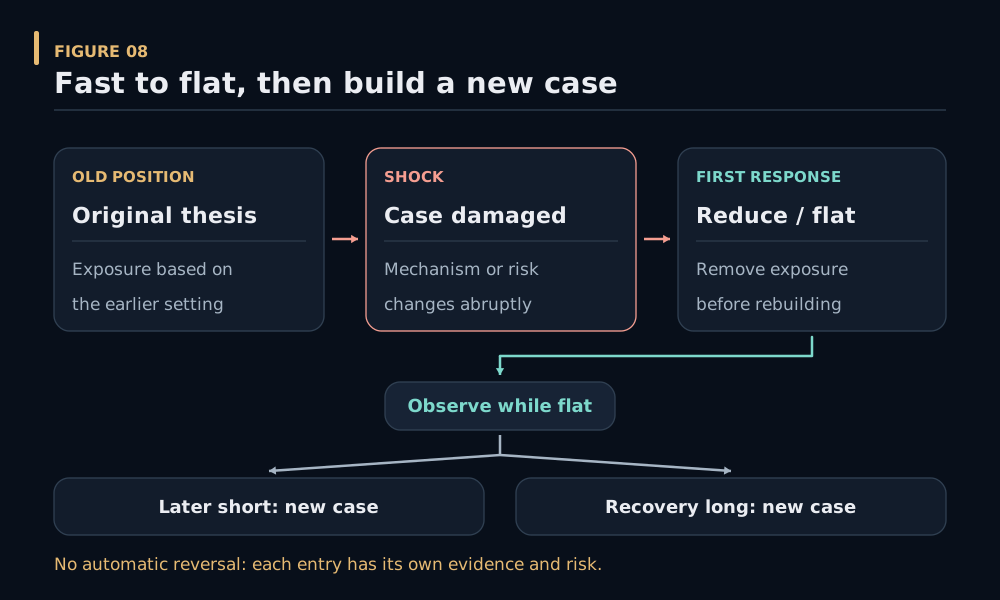
Figure 8: Remove damaged exposure promptly; a later short or recovery long needs a new case.
The same discipline matters near a parabolic move. A winner that suddenly accelerates may have delivered much of the payoff you originally sought while exposing you to a sharp reversal. Ask the jury to assess the remaining trade, not the satisfaction of having been right. Taking profit or going flat is a complete decision even if the market later travels further.
Concentrated risk and scaling into an exceptional trade require a fresh verdict. The added exposure needs its own reason, an assessment of the combined loss if the whole theme turns, and enough remaining payoff at the new price. More conviction after a price move is not itself new evidence. The actual contract size, costs, liquidity and possible gaps matter more in fast markets; a stop order is not a guarantee of a particular fill.
Try it: Imagine you are long an index for an improving growth story. A sudden geopolitical shock causes a broad selloff and your original cross-market confirmations break. Write the immediate risk decision in one sentence. Only then write what evidence you would require to consider a later short or a recovery long.
Takeaway: Reopen the case when facts, price or payoff change. Be fast to remove exposure when the old case is damaged; take your time before adopting a new one.
Lesson 6 - Practise discretion in small, visible decisions
Teaching aim: Turn an attractive idea about judgment into a repeatable learning habit.
Begin with one candidate from the dashboard each morning. It can be a market you already understand or the obvious focus of a shock. You are practising the quality of a decision, not trying to manufacture a daily trade.
Give the exercise ten minutes:
- Write the dominant driver, the prevailing expectation and the next catalyst.
- State one trade proposition with a holding window and a plausible mechanism.
- Give the prosecution its strongest two points before writing the defence.
- Record what price has already done and what room appears to remain.
- Deliver a conditional verdict with a review time or event.
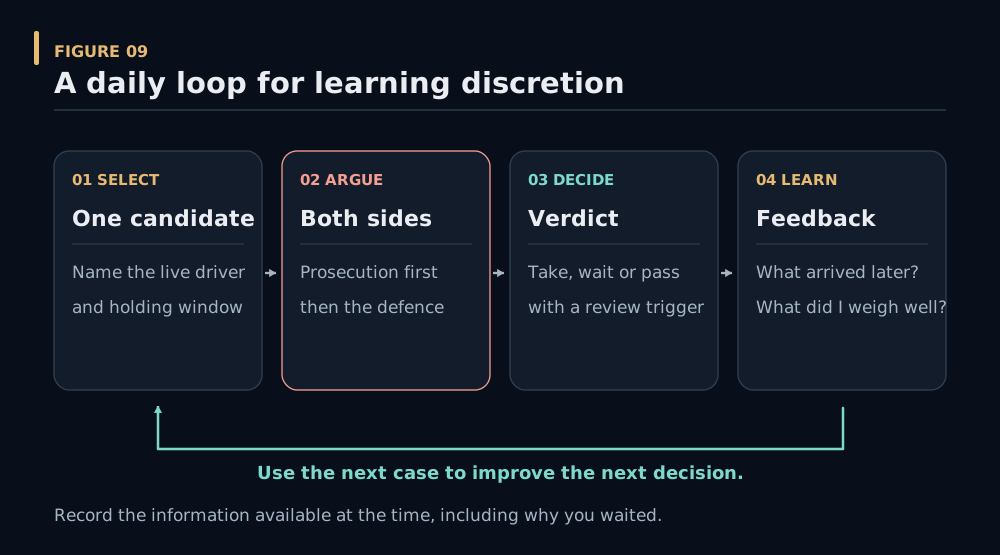
Figure 9: One well-recorded decision each day gives you material to learn from.
Keep a dated card. An empty field is useful: it shows exactly what you have not established. If a source is delayed, say so. If you cannot yet work out what one point in a CFD or futures contract is worth, the verdict on placing that trade is wait, regardless of how good the market story sounds.
Your daily Courtroom card
| Field | Short answer |
|---|---|
| Date, market and current state | |
| Dominant driver and current narrative | |
| Proposed direction, mechanism and horizon | |
| What was expected or already priced? | |
| Prosecution: strongest contrary evidence | |
| Defence: strongest fresh support | |
| What price and related markets actually did | |
| Entry condition; adverse path; remaining payoff | |
| Verdict: take / wait / less risk / pass / hold / reduce / exit | |
| What would change the verdict; next review |
After the event, add only two lines: What happened? and What did I miss or weigh well? A winning trade can come from poor reasoning and a losing trade from a well-managed decision. Judge the process with the information you had at the time, then learn from the result. You can use an AI assistant to draft the opposing case or spot a missing source, but make the verdict yourself and verify any decisive claim.
For your first several weeks, work with a narrow menu: post-catalyst continuation, failed-consensus reversal, and the risk decision to reduce or go flat when a shock or exhaustion changes a position you already own. Watching one market carefully is more instructive than claiming an opinion on every market. If you choose to trade with real capital, make the initial size small enough that a normal loss will not stop you from following the process. Understand the instrument and the full exposure before entering.
Final exercise: Keep five Courtroom cards, including at least two verdicts of wait or pass. Return to them after the next catalyst. Did the prosecution identify the real risk? Did the defence name evidence that actually appeared? Did your chosen entry improve or worsen the opportunity? Rewrite one verdict using only the information that was available when you made it.
Takeaway: You build discretion by making your reasons explicit, risking selectively and updating honestly. The skill is available to a new trader who is willing to practise it; it is never a guarantee of profit.
A closing thought
Trust the common sense that makes you pause when an explanation sounds too easy, a trade looks crowded, or the price has already run away. Then do the work to find out whether that instinct survives the evidence. You can take a small, well-defined trade when the case and the price justify it. You can also wait or go flat without apologising for either decision.
The dashboard helps you arrive prepared. The Courtroom Method helps you give both sides a fair hearing. You decide what deserves your capital today, and you remain free to change your mind when the case changes.
This course is educational. Trades can lose money. The examples are hypothetical, and no dashboard reading or Courtroom verdict promises a result.
Further reading: The Discretionary Edge and the preceding Macro for Active Traders course.